
Back to Blog
November 4, 2026
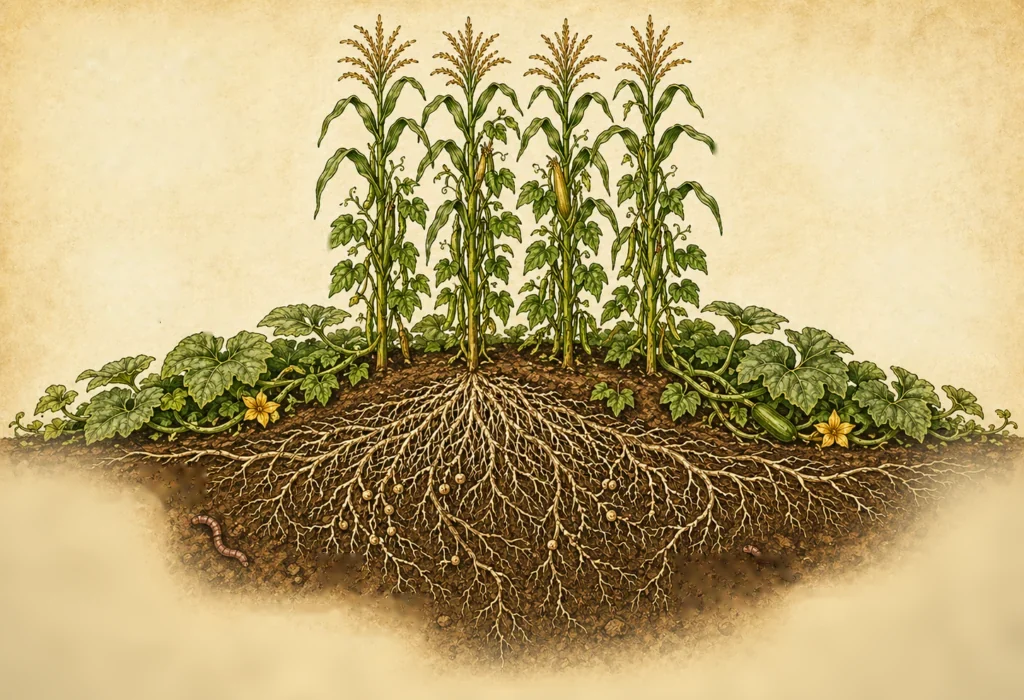
The Three Sisters refers to corn, beans, and squash when grown together in the same mound, or eaten together on the same plate. Indigenous farmers across North America have kept this practice for centuries, and it is still taught and planted today. Each plant helps the other grow, and together they make a nourishing, flavorful diet. Here’s where the tradition comes from, how it works, and how to honor it on your menu this Native American Heritage Month.
What are the Three Sisters?
“Three Sisters” is the English name for when corn, beans, and squash are grown or eaten together, and it isn’t the only way to honor this nutrient-dense trio. Rick Hill of Six Nations Polytechnic writes, “We don’t really have an expression such as the Three Sisters.” In Seneca, the three belong to the Johëhgöh, the “Foods that Sustain Us.”
The origin story differs from nation to nation. One Haudenosaunee story tells of three sisters with very different personalities who care for each other, drift apart and come back together, never wanting to separate again. In Haudenosaunee creation stories, the three are tied to Sky Woman: in one telling they came with her from the Sky World, and in another they grew from the place where her daughter was buried. As Mohawk storyteller Kay Olan puts it, “When we’re eating corn, beans and squash together, we’re reminded of that lesson in cooperation.”
“We don’t really have an expression such as the Three Sisters.”
Rick Hill, Six Nations Polytechnic
Which Native nations grow the Three Sisters?
The practice is most closely associated with the six nations of the Haudenosaunee Confederacy: Mohawk, Oneida, Onondaga, Cayuga, Seneca and Tuscarora. It is also part of Cherokee agriculture in the Southeast; Mandan and Hidatsa agriculture on the Plains; and Hopi and Zuni agriculture in the Southwest.
- How old it is: archaeologists date the corn, bean, and squash complex in North America to about 1070 AD, and the Seneca grew it for at least 500 years before European contact. Its roots in Mesoamerica go back thousands of years, where a related system, the milpa, is still farmed.
- Who farmed it: among the Haudenosaunee, women planted and tended the fields.
- Where it’s taught today: the Akwesasne Freedom School teaches it to Mohawk students, and the Chickasaw Nation presents it at its Three Sisters Festival.
How does Three Sisters planting work?
The three are planted together in raised mounds, and each one does a job for the others:
- Corn grows tall and gives the beans a stalk to climb.
- Beans host bacteria on their roots that pull nitrogen from the air into the soil, feeding the corn.
- Squash spreads broad leaves across the ground, shading the soil, holding moisture and keeping weeds down.
It is also remarkably productive. Tuscarora agronomist Jane Mt. Pleasant, now an emerita professor at Cornell, found that a Three Sisters field produces more food energy and protein than the same land planted with any of the three crops alone: about 12.25 million calories and 349 kilograms of protein per hectare, enough to feed roughly 13 people for a year on just one hectare.
Why should corn, beans, and squash be eaten together?
Corn and beans make a complete protein, with beans supplying the amino acids that corn lacks. That pairing runs through Haudenosaunee cooking in corn soup, cornbread, and succotash made with green corn scraped from the cob and simmered with young beans. Adding just a cup of cooked butternut squash to the mix provides only 80 calories and a whopping 6.6 grams of fiber, plus well over a full day’s worth of vitamin A from its beta-carotene. It’s also an excellent source of vitamin C and a good source of potassium.
What is hominy, and why does it matter?
Hominy is corn cooked in an alkaline solution, a process called nixtamalization. Indigenous cooks developed it first in Mesoamerica, with equipment found in Guatemala dating to 1200 to 1500 BCE, and by about 900 CE people in the American Southeast were making hominy with lye from hardwood ash. The process makes corn far more nourishing, raising its calcium and protein quality while unlocking niacin. When corn spread to Europe and the American South without the technique, pellagra, a niacin deficiency, followed. It is Indigenous food science, and it is still how good hominy is made.
How can you honor the Three Sisters on your menu?
The Three Sisters have fed this land for centuries, and they belong on the menu all year – not only in November. When menuing a dish featuring the Three Sisters, tell guests where the trio comes from. Name the tradition and the nations behind it on your menu card or signage, and buy from Native producers when you can.

Our Native Three Sisters soup is specifically named for and inspired by this tradition. It’s built on ancient hominy corn, butternut squash, and great northern, black and pinto beans, with aji and chipotle peppers for gentle warmth and fresh cilantro to finish. It’s plant-based, 100% clean label and naturally high in fiber.
- Three Sisters wild rice bowl: the soup ladled over wild rice, with roasted squash and tepary beans.
- Cornbread-stuffed squash: roasted squash filled with cornbread and a spoonful of the soup on top.
- Three Sisters Jackfruit Quesadilla: the soup as the filling seasoning, with stoneground corn tortillas.
Building a full feature? Pair it with Green Chile Posole on the menu, created by The Sioux Chef and one of our Impact Board memebers, Chef Sean Sherman. His soup brings hominy and beans together in a brighter, tomatillo-driven bowl.
For menu ideas highlighting the Three Sisters, you can contact our team directly. We have fully vetted recipes waiting to be featured on your next menu..
Sources
- Rick Hill (Six Nations Polytechnic), “Our Changing Relationship to Foods: Part One,” Two Row Times, January 13, 2016: “We don’t really have an expression such as the Three Sisters,” the Seneca terms, and the Sky Woman stories.
- Vincent Schilling (Akwesasne Mohawk), “What Are the ‘Three Sisters’ of Native American Agriculture?” HISTORY, November 2025: the nations, the sisters story, Kay Olan’s quote, the Akwesasne Freedom School and the Chickasaw Three Sisters Festival.
- Haudenosaunee Confederacy, “Food and Hunting”: planting in raised hills, women tending the fields, corn soup, cornbread and succotash.
- Jane Mt. Pleasant, “Food Yields and Nutrient Analyses of the Three Sisters,” Ethnobiology Letters, 2016: yields per hectare, people fed, and nixtamalization raising calcium, protein quality and niacin.
- Wikipedia, Jane Mount Pleasant: Tuscarora heritage and Cornell position.
- USDA National Agricultural Library, “The Three Sisters of Indigenous American Agriculture”: the 1070 AD date, at least 500 years of Seneca cultivation, Mesoamerican roots, and how the plants help each other.
- Wikipedia, Nixtamalization: Mesoamerican origin, the 1200 to 1500 BCE evidence, hardwood ash hominy by about 900 CE, and pellagra. Check the cited primary sources before publishing.
- Tufts Health & Nutrition Letter, “Beyond Pumpkin: Harvest the Health Benefits of Winter Squash” (updated February 2020): butternut squash calories, fiber, vitamin A, vitamin C, potassium, lutein and zeaxanthin.
Keep reading
- Our Changing Relationship to Foods, by Rick Hill in Two Row Times: Haudenosaunee food in Haudenosaunee words
- The Three Sisters of Indigenous American Agriculture, from the USDA National Agricultural Library
- Food Yields and Nutrient Analyses of the Three Sisters, by Jane Mt. Pleasant
FAQ
What are the Three Sisters? The Three Sisters are corn, beans and squash grown together in the same mound and eaten together, a practice kept by Indigenous farmers across North America for centuries. “Three Sisters” is an English name. In Seneca, the three belong to the Johëhgöh, the “Foods that Sustain Us.”
Which Native nations grow the Three Sisters? The practice is most closely associated with the Haudenosaunee Confederacy (Mohawk, Oneida, Onondaga, Cayuga, Seneca and Tuscarora). Cherokee, Mandan, Hidatsa, Hopi and Zuni farmers also grow corn, beans and squash together.
How does Three Sisters planting work? Corn gives beans a stalk to climb, beans add nitrogen to the soil through bacteria on their roots, and squash leaves shade the ground, hold moisture and keep weeds down. Research by Tuscarora agronomist Jane Mt. Pleasant found the system yields more food energy and protein per hectare than any of the three crops grown alone.
What is hominy? Hominy is corn cooked in an alkaline solution, a process called nixtamalization that Indigenous cooks developed in Mesoamerica thousands of years ago. It raises the corn’s calcium and protein quality and makes its niacin available.
What is Native Three Sisters soup? Native Three Sisters is a Wholesome Crave soup named for and inspired by the Three Sisters tradition. It is made with ancient hominy corn, butternut squash, and great northern, black and pinto beans, and it is plant-based and 100% clean label.
Recent News

What Diners Want in 2026: The Mixed-Protein Shift, Explained for Operators
August 25, 2026

The Art of Chef-Crafted Nutrition: Exploring the Fusion of Flavor and Health
August 30, 2023
Understanding Food Equity: The Foundation of Wholesome Crave’s Mission to Foster Healthy Change
August 13, 2023
How Wholesome Crave Was Started: Our Mission to Promote Change
July 24, 2023

What is Wholesome Wave?
July 9, 2023

Wholesome Crave Teams Up With Nestlé Professional and UMass Dining to Spearhead Sustainable Plant-Based Movement
June 28, 2023